
Can Cyber Defenders Keep Pace with AI? A North Dakota Conference Put the Question on the Table
AI is making cyberattacks faster, cheaper, and harder to spot, while handing defenders the same tools to fight back. That race is now reaching some unexpected areas like power grids, water plants, and even old, reactivated satellites. In October, researchers, students, industry experts, and government leaders gathered at the University of North Dakota for three days to discuss what comes next.
This was the sixth annual Cyber Awareness & Research Symposium, organized by IEEE, the world’s largest technical professional group, and hosted by UND’s engineering school. Sessions were held both in person and online.
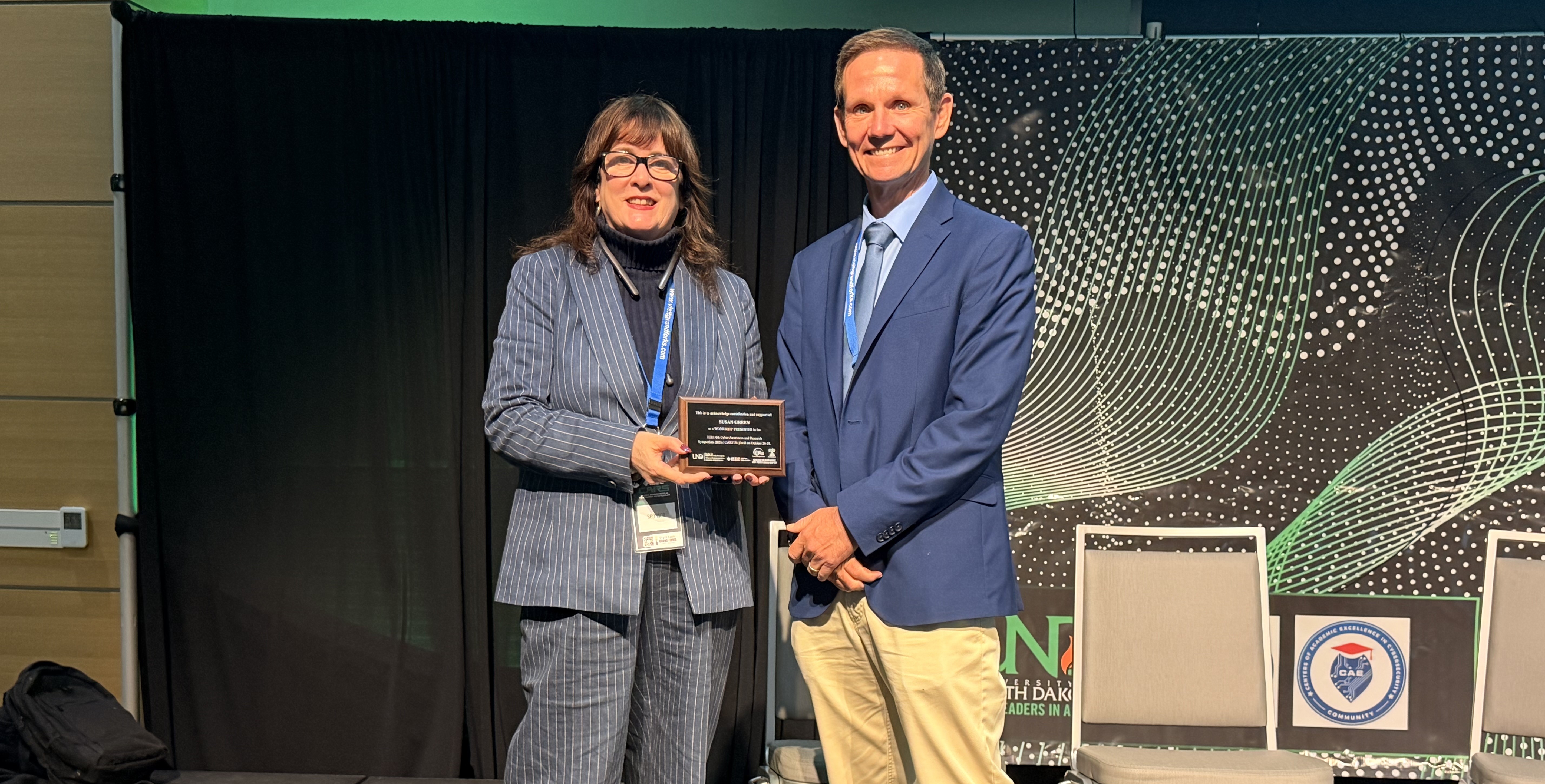
CyberproAI took part with a hands-on workshop on operational technology security, with Susan Green, Vice President of Sales for North America SLED at CyberproAI, joining discussions about how universities, industry, and government can team up to train the people who protect critical systems.
Inside the Race
The program covered topics from autonomous systems to digital deception. Attackers now use AI to write convincing phishing emails in any language, find vulnerabilities faster, and run campaigns that used to require a whole team. Defenders use AI to sort through thousands of alerts and spot unusual activity that analysts might miss.
One of the standout talks took a different approach. Benjamin Blakely from Argonne National Laboratory asked what AI still can’t do for critical infrastructure security, which was a sharp question at a conference full of AI-focused sessions.
The point isn't that AI is overhyped. It's that AI struggles where critical systems are hardest: messy real-world conditions, missing information, and choices without clear answers. AI might notice if a water plant is acting oddly, but deciding to shut it down is still up to people.
Other sessions widened the lens. NullSat Group looked at the risks of reactivating old satellites, and speakers from companies like Google and Fortinet shared their industry insights.
Where the Stakes Are Highest
Critical infrastructure includes the power, water, transportation, health, and finance systems that people depend on every day. This topic has always been a main focus of the conference, and UND’s cyber research center works on protecting the power grid.
This year, critical infrastructure had its own track, covering threats to aviation, smart grids, and the control systems behind industrial plants. These systems are more connected and targeted than ever before. Everyone at the conference agreed that AI will change cyber defense. The main concern was whether we are training defenders quickly enough to keep up.
The Fundamentals of OT Security
CyberproAI's answer was a workshop. "Critical Infrastructure: The Fundamentals of OT Security" brought together about fifty students from 21 colleges and universities across the United States and beyond, alongside a utility provider and a state cybersecurity professional from North Dakota.
The workshop started from a simple fact: water treatment, power and gas all run on control systems built decades before the internet, and most are now reachable from it. In 2000, a contractor in Queensland released 800,000 liters of sewage into public waterways with a radio and a laptop. In 2026, attackers compromised more than 30 Minnesota water systems using default credentials on internet-exposed control interfaces.
From there, participants worked through the foundations: how OT differs from IT, the Purdue model and how it aligns with familiar models such as OSI, industrial protocols that have no authentication by design, and the frameworks operators answer to, including NERC CIP, EPA/AWIA and CIRCIA. Every participant received a certificate on completion.
Participating institutions included Brigham Young University, Colorado State University, Dakota State University, Indiana State University, Loyola University Chicago, Marymount University, the North Dakota University System, Northern Illinois University, Sam Houston State University, The University of Texas at San Antonio, Turtle Mountain College, the University of Abuja, the University of Arizona, the University of Massachusetts Amherst, the University of Memphis, the University of Nebraska Omaha, the University of North Dakota, the University of the Pacific, the University of Puerto Rico, the University of South Alabama and West Virginia University.
From Classroom to Control Room
CyberproAI focuses on closing this gap by helping people turn what they learn into real skills they can use under pressure.
Using Cympire, its cloud-based cyber training platform, the company partners with universities, public agencies, and infrastructure operators to practice realistic attacks in a safe setting. Teams learn to spot, decide, and respond together, so their first real incident isn’t the first time they’ve faced one.
That’s also why CyberproAI took part in Grand Forks. Research points to where threats are going, and training needs to keep up, so defenders are ready for future attacks, not just the ones from the past.
As AI advances for both attackers and defenders, it will become even more important to keep research and practice closely linked.
Thank you to the University of North Dakota, the organizers, and everyone who participated.
Event Gallery
Stay Ahead of the Curve
Get the latest insights on global cyber resilience and AI defense delivered to your inbox.