
When the Right Instinct Is the Wrong Move. An OT Workshop with SecureCyber in Ohio
Forty-two days. That is how long ransomware sat inside operational technology environments, on average, before it was caught last year, according to Dragos's 2026 OT/ICS Year in Review.
Organizations that had good visibility into their OT networks found and contained these attacks in just five days. Dragos found that part of the reason for the gap is that many industrial organizations treat ransomware as only an IT issue and do not realize how much it can affect their operations.
That label is important because it shapes how people respond. IT responders are trained to act fast: isolate the infected machine, shut it down, patch it, and rebuild it. On a corporate network, this approach works well. But in an OT environment, doing the same things can stop the physical process a system controls, disconnect operators from their equipment, or even create new safety risks. The right instinct in IT can be the wrong move in OT.
This is why, in October, CyberproAI held a hands-on OT workshop for the analysts and responders at SecureCyber, one of Ohio's established managed security providers.
A SOC That Chose to Train Ahead
SecureCyber has dealt with tough incidents before. Founded by Shawn Waldman in 2015, the company runs a staffed Security Operations Center for clients in manufacturing, finance, aerospace, and government. In addition to managed security, assessments, and compliance work, the team is always ready to respond to incidents and ransomware.
This made the workshop valuable. Even though the team already handles ransomware all the time, they chose to test their instincts in a setting where those instincts could have different results, before a real client needed them to.
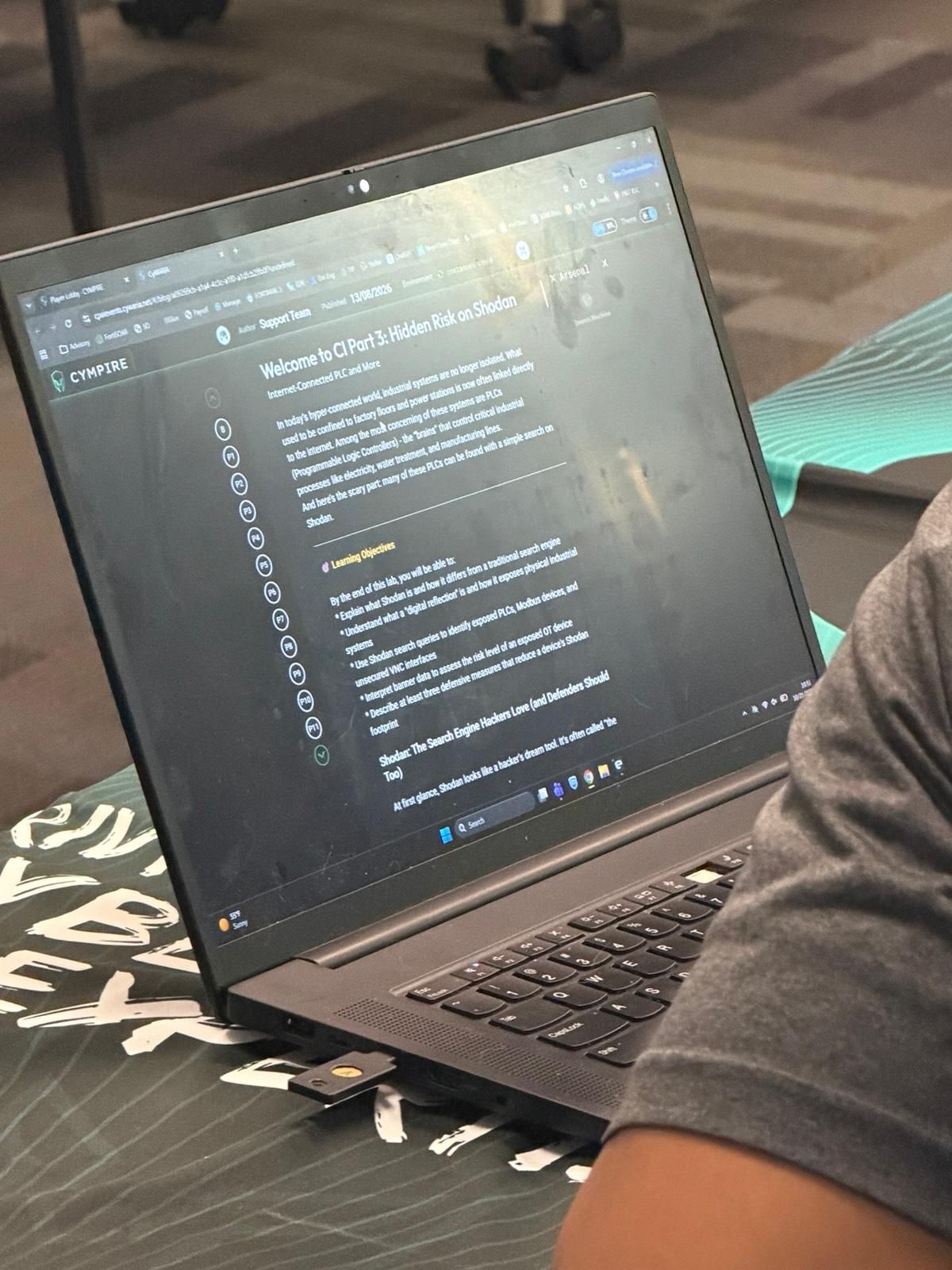
Ken Smith, Director of Cyber and AI Solutions & Strategic Partnerships at CyberproAI, led the workshop. He was joined by Oron Mincha, GM North America, and Eyal Mozer and Idan Schein from CyberproAI's U.S. team. The workshop used Cympire, CyberproAI's cloud-based cyber range and training platform.
Retraining the Reflex
The session began with an overview of the industrial control systems that support critical infrastructure and how closely they connect to physical processes. In OT, systems often cannot be patched on a set schedule or taken offline for investigation, so every response must consider safety and continuity as well as containment.
Next, the team worked through realistic attack scenarios. They learned to spot attacks that affected physical operations and had to decide how to respond without causing more harm. In OT, the right response is often slower than in IT: you need to know what a system controls before acting, contain the threat without stopping the process, and involve the people who run the operation in the decision. It only takes a few minutes to hear that OT is different, but it takes practice to resist the urge to react like you would in IT.
Before the Instinct Is Tested
The workshop gave SecureCyber's team a chance to make these decisions and even make mistakes, without any real-world consequences. Dragos's numbers show what can happen when teams face these choices for the first time during a real incident.
This challenge is not unique to just one SOC. Every security team that handles incidents for industrial clients brings IT instincts into OT environments, and many have never had the chance to test those instincts in OT before.
In IT, the right instinct helps contain the damage. In OT, it can actually cause damage. The best time to learn the difference is in a workshop, not during a real incident.
CyberproAI thanks Shawn Waldman and the entire SecureCyber team.
Event Gallery
Stay Ahead of the Curve
Get the latest insights on global cyber resilience and AI defense delivered to your inbox.