
Readiness Isn't Declared. It's Proven. With Ulu HI-Tech in Hawaii
Most organizations can tell you whether they are ready for a serious cyber incident. Far fewer can tell you how they know. Readiness is declared in plans, approved in audits and reported upward with confidence, yet much of it has never been tested against the conditions it is meant to survive.
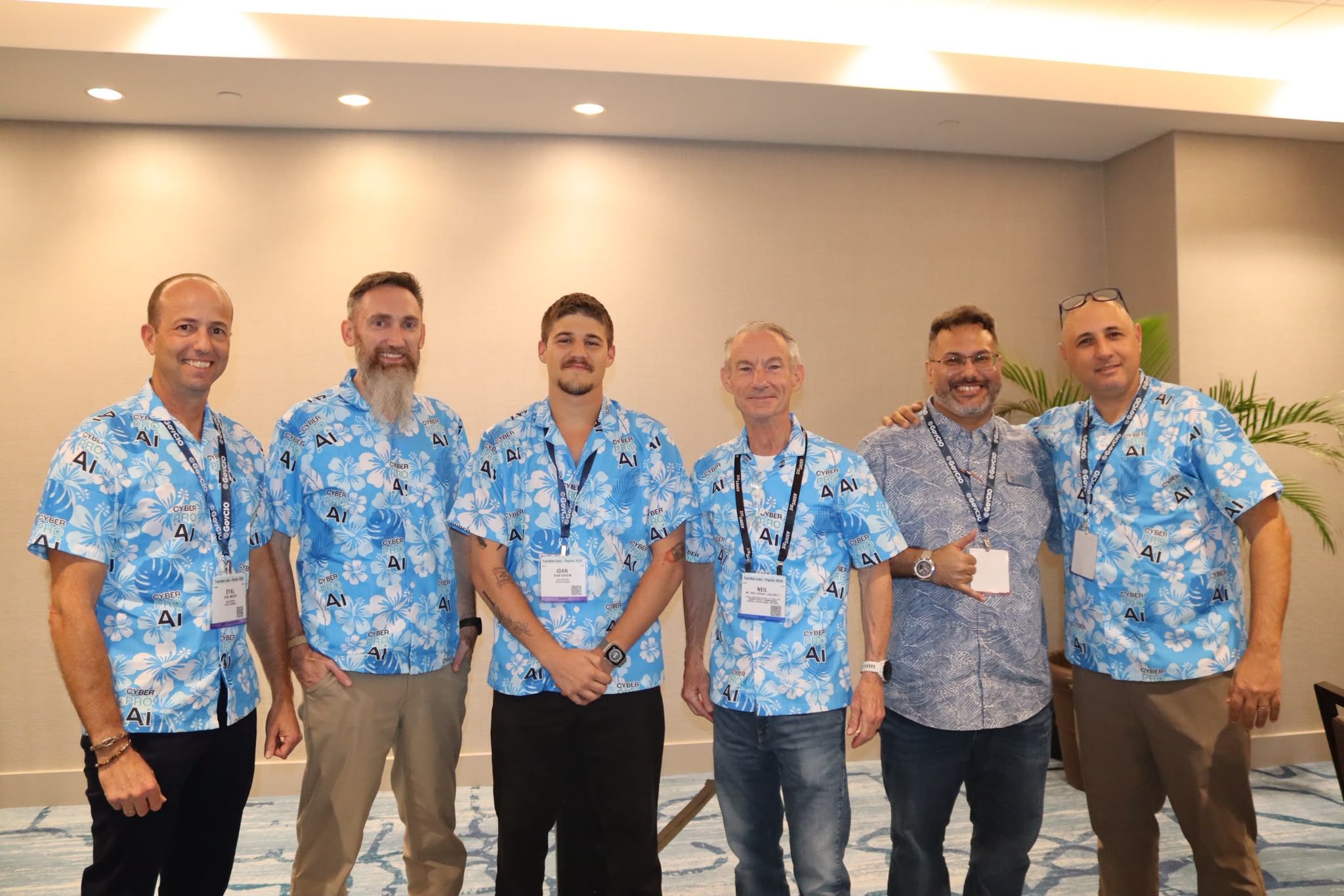
Our position is simple. Readiness that has not been tested is not readiness. It is an assumption, and assumptions are exactly what attackers count on. It is the conviction we brought to TechNet Indo-Pacific 2026 in Honolulu, October 26 to 29, alongside our partners at Ulu HI-Tech, a Honolulu-based DevSecOps company.
Now in its 41st year, the AFCEA International and AFCEA Hawaii conference is the largest strategic event of its kind in the region, and this year's theme focused on decision superiority, superintelligence integration and allied interoperability. That focus raises an obvious follow-up: a decision built on untested assumptions is not superior to anything.
Readiness Is Shared, So Testing Must Be Too
Maj. Gen. (Ret.) Neil Hersey, who serves on the CyberproAI Advisory Board, led a panel on mission readiness in today’s world of superintelligence and cyber threats. Senior leaders from DISA, the U.S. Pacific Fleet, the State of Hawaii, and the University of Hawaii joined him. The main question was how to validate readiness not just within one organization, but across joint forces, government agencies, and mission partners.
This question is important because an organization might succeed in every internal exercise but still fail when it relies on others—a partner it hasn’t trained with, data it hasn’t checked, or a handoff no one has practiced. Hersey emphasized the need for trusted data, sound judgment, and partnerships built before a crisis. "Technology alone doesn't create readiness," he said. "It's the combination of people, partnerships, and capabilities, integrated, tested, and trusted, that makes the difference."
Getting Oriented Before It Counts
Nowhere is untested readiness more dangerous than in operational technology, where a wrong move can affect physical processes rather than just data. Together with Ulu HI-Tech, CyberproAI ran an OT cyber workshop and capture-the-flag exercise led by Ken Smith, Director, Cyber and AI Solutions & Strategic Partnerships. Eight participants trained on Cympire, CyberproAI's cloud-native cyber range, moving from an IT network into the operational environment and working toward HVAC controls and power plant systems.
The biggest challenge wasn’t finding targets, but understanding your position in the network. In a segmented OT network, every move must be considered carefully. This is not a skill anyone should learn for the first time during a real incident. "It was very in-depth. We learned a lot about the system itself, how flexible it is and how user-friendly it is," said Jimmy Wong, Cybersecurity Analyst at CNIC.
What Testing Should Look Like
If readiness must be proven, three things are needed. Testing should go beyond one organization, since real incidents often involve multiple groups. It should happen in environments that match the real systems teams protect, including OT, where mistakes can have real-world effects. Partnerships should also be built ahead of time, which is why CyberproAI and Ulu HI-Tech ended the week with a reception for partners and local leaders in Hawaii.
A plan shows what should happen, but only a test shows what will actually happen. Our experience in Honolulu confirmed this belief. Readiness isn’t something an organization has. It is something an organization proves, and the best time to do that is before someone else puts it to the test.
CyberproAI thanks Julie Weinstein, Gregory Hester, Emily Warren, Michael Gonzalez, and the entire Ulu HI-Tech team for their partnership throughout the week.
Event Gallery
Stay Ahead of the Curve
Get the latest insights on global cyber resilience and AI defense delivered to your inbox.